Description
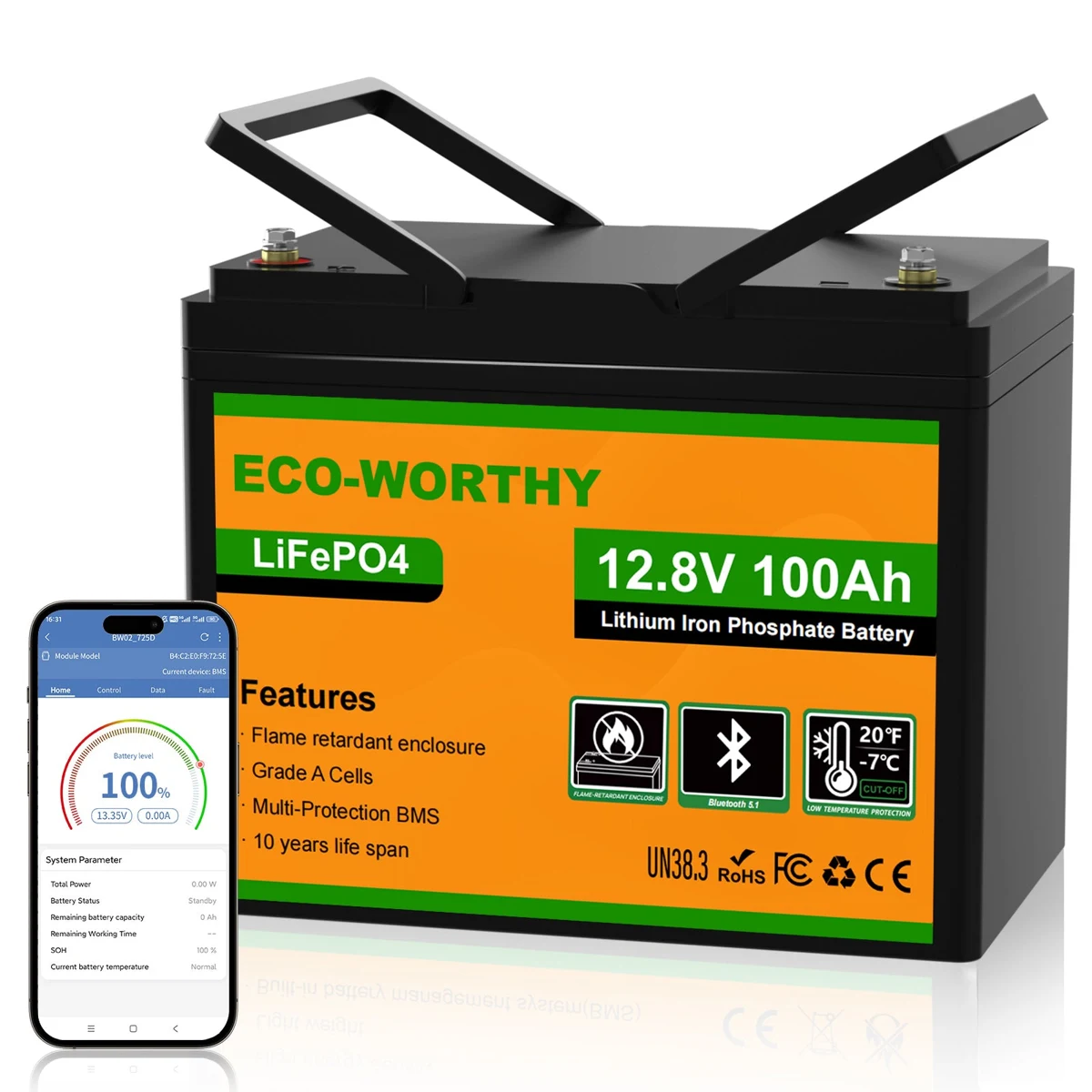
The ECO-WORTHY 12V 100Ah Bluetooth LiFePO4 battery combines 1,280Wh of nominal energy with phone-based monitoring in a 260 x 168 x 214mm case. It is a 12V-class storage battery with a true nominal voltage of 12.8V, useful when planning a compact leisure or DC energy system without choosing a larger 314Ah enclosure.
What this model offers
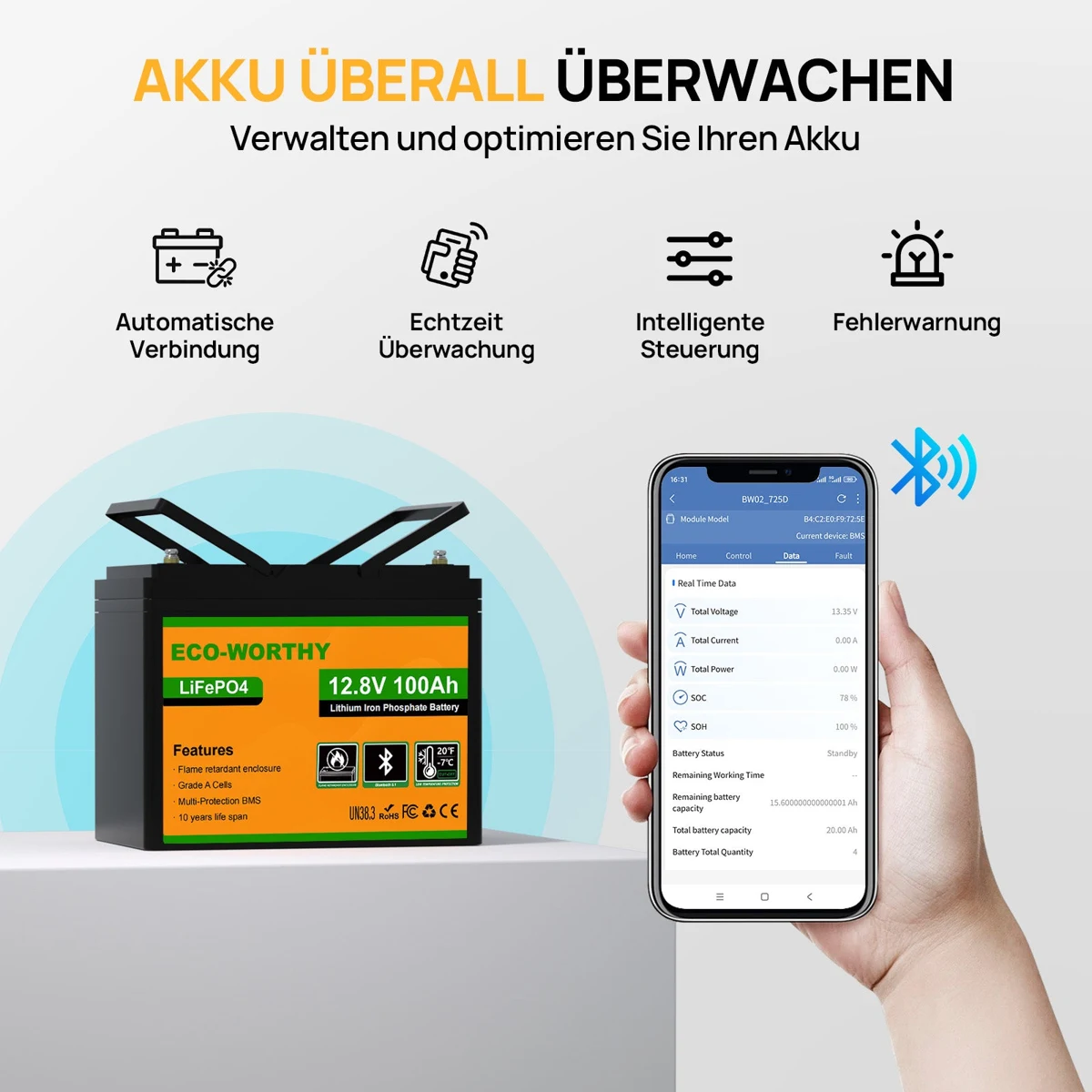
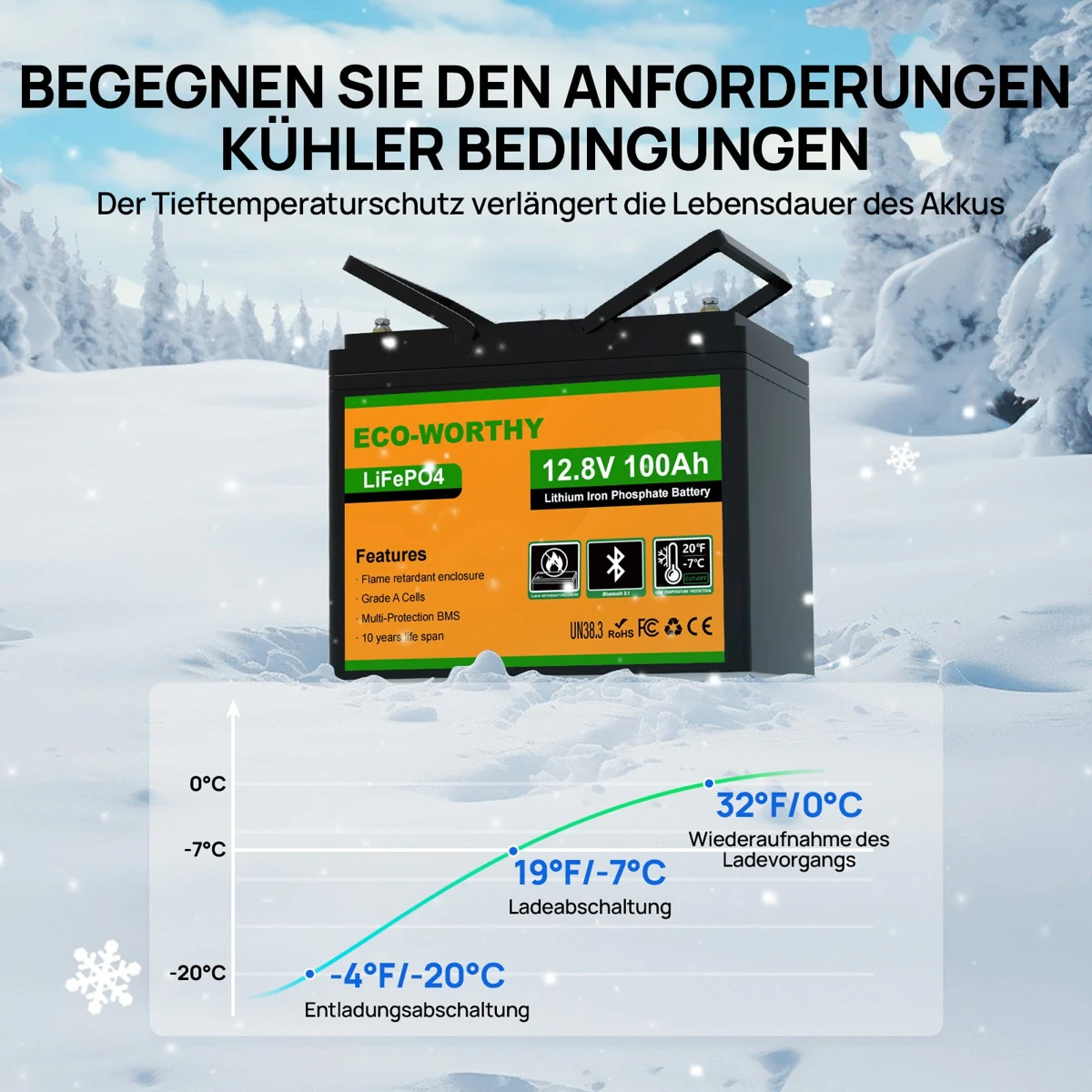
Built-in Bluetooth provides battery monitoring without claiming inverter control or automatic PC shutdown. The documented 100A BMS and 100A maximum continuous charge/discharge limits are separate from the energy capacity. M8 terminals and a stated 10.5kg weight help plan mounting and cable connections. Charging is specified from 0 to 55°C, discharge from -20 to 55°C, with cold-charge protection. The EU model uses a 14.5V charge limit; do not replace it with a different version’s 14.6V figure.
Documented specifications
| Nominal voltage | 12.8 V |
|---|---|
| Rated capacity | 100 Ah |
| Rated energy | 1280 Wh |
| BMS continuous current | 100 A |
| Maximum continuous charge current | 100 A |
| Maximum continuous discharge current | 100 A |
| Charge voltage / published maximum | 14.5 V |
| Discharge cutoff voltage | 10 V |
| Dimensions (L x W x H) | 260 x 168 x 214 mm |
| Weight | 10.5 kg |
Choosing this battery for your system
For a campervan leisure battery, off-grid DC supply or solar energy store, start with the voltage of your charger and connected equipment. Match continuous demand and startup current to this exact model, then check the enclosure space and operating temperature. A battery is an energy-storage component: AC appliances require a compatible inverter, while DC appliances need a suitable input range or DC-DC converter. The battery alone does not supply regulated mains electricity.
Capacity, power and realistic runtime
The manufacturer states 1280 Wh of nominal stored energy at 12.8 V. Amp-hours describe capacity; watt-hours are the more useful starting point when comparing loads at different voltages. An ideal runtime estimate is nominal Wh divided by the measured load in watts. Real runtime is lower because of conversion losses, standby consumption, temperature, discharge limits and the reserve you choose. This is a sizing method, not a tested runtime claim or a guarantee that every nominal Wh can reach your appliance.
Charging, protection and installation
Set the charger for LiFePO4 chemistry and the documented 14.5 V charge limit. Do not assume an existing lead-acid charger is compatible: verify its full charging profile and disable unsuitable equalisation or desulphation modes. Keep charging current within the model limit. Battery management protection is a last protective layer, not a substitute for an external fuse, correct wiring or normal low-voltage shutdown. Check polarity before connection and isolate the battery before working on the installation.
Charging and discharging have different temperature limits. Follow the exact ranges in the datasheet, allow for enclosure temperature and ventilation, and do not treat low-temperature charge protection as proof of a self-heating function. Outdoor exposure and water resistance must also be checked for the exact model; an IP rating from a different battery revision does not establish suitability for this one.
Manufacturer documents and included equipment
Use the PVShop datasheet together with the original manufacturer PDFs available on this page. The manufacturer brand and model are retained; the PVS code is the shop reference. The documents include supplied graphs or reference material where available and explain revision differences. Published figures are manufacturer statements, not PVShop laboratory results. The sale is for one battery, not a complete solar installation, inverter system, rack or charger bundle.
Delivery to the EU
Estimated total processing and delivery from European stock: 7–10 days. The supplier confirmed this estimate on 29 September 2026. Delivery is offered to EU countries; estimates are not a guarantee.
Frequently asked questions
Can I connect a solar panel directly?
Use a suitable solar charge controller between the panels and this battery. Match its battery profile, voltage and charge-current settings, and check the panel array against the controller input limits. A panel is not a regulated LiFePO4 charger. No solar controller or panel is included with this single-battery product.
Is it a direct replacement for every lead-acid battery?
No universal replacement claim is made. Check physical fit, terminal arrangement, charging profile and the equipment voltage limits. In a vehicle, alternator charging may require a compatible DC-DC charger. This is a storage battery; engine-starting or traction suitability is not established by its amp-hour capacity.
Can I build a larger battery bank?
Use only the connection arrangement explicitly allowed for this exact model in its manufacturer manual. Series connection changes system voltage; parallel connection changes capacity and demands balanced wiring and suitable protection. Use matched batteries and follow the commissioning procedure. Never assume that a connection limit published for another ECO-WORTHY model applies here.
Compare battery capacity, voltage and documented monitoring features


